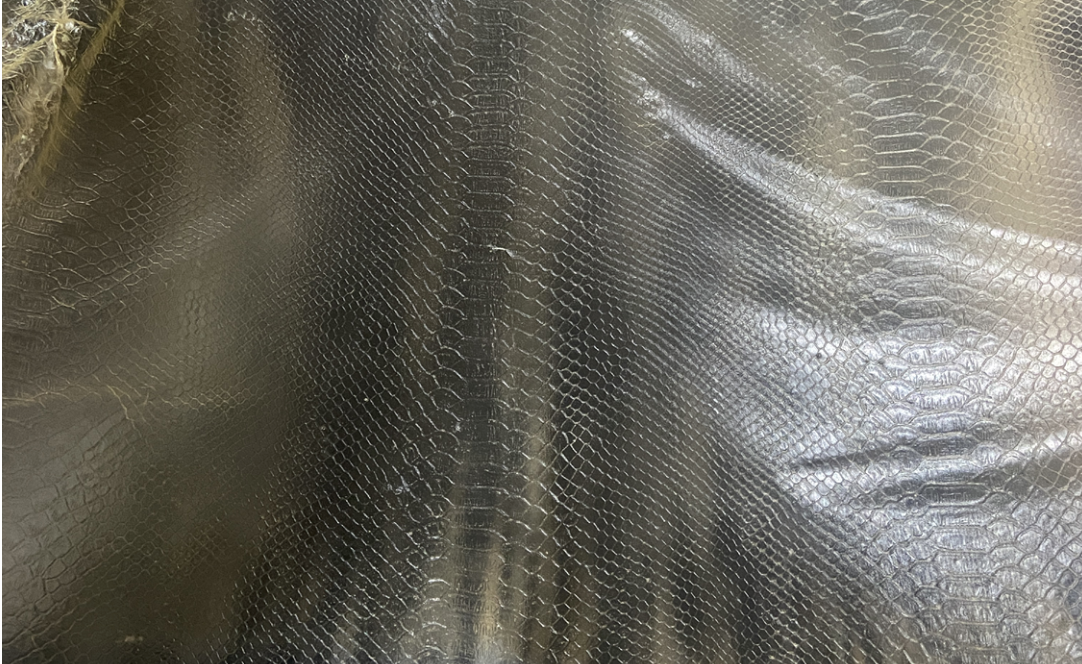
TRANSLUCENT LATEX SKINS
Material research and development by Janine Grosche / PATH
Janine Grosche develops translucent latex skins from natural liquid latex, creating thin yet resilient surfaces that move between textile, skin and sculptural material.
Developed through years of independent material research, the skins behave almost like biological membranes: translucent, flexible and tactile, while retaining enough structure to become self-supporting forms.Big Ideas, Real Impact.
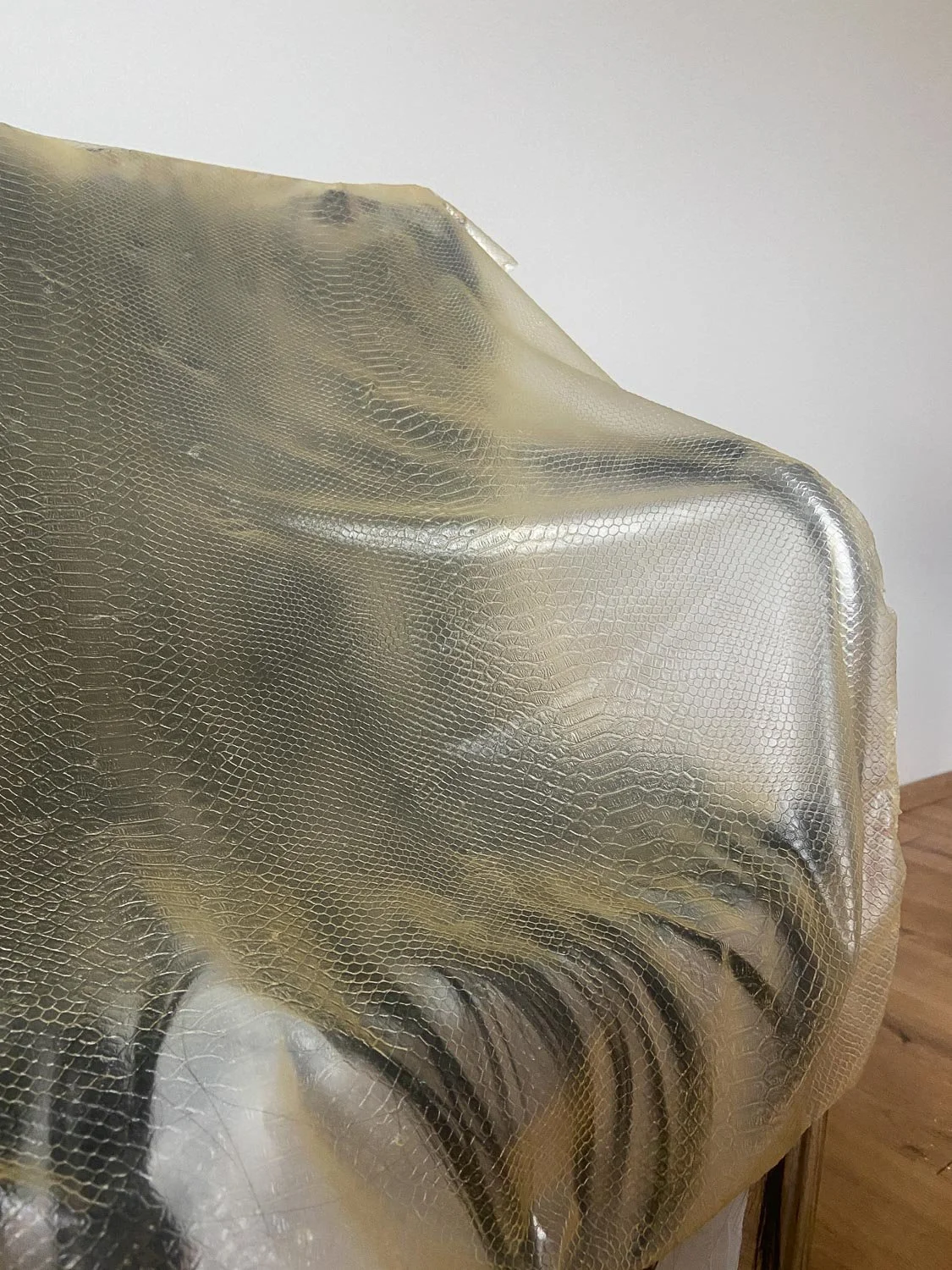
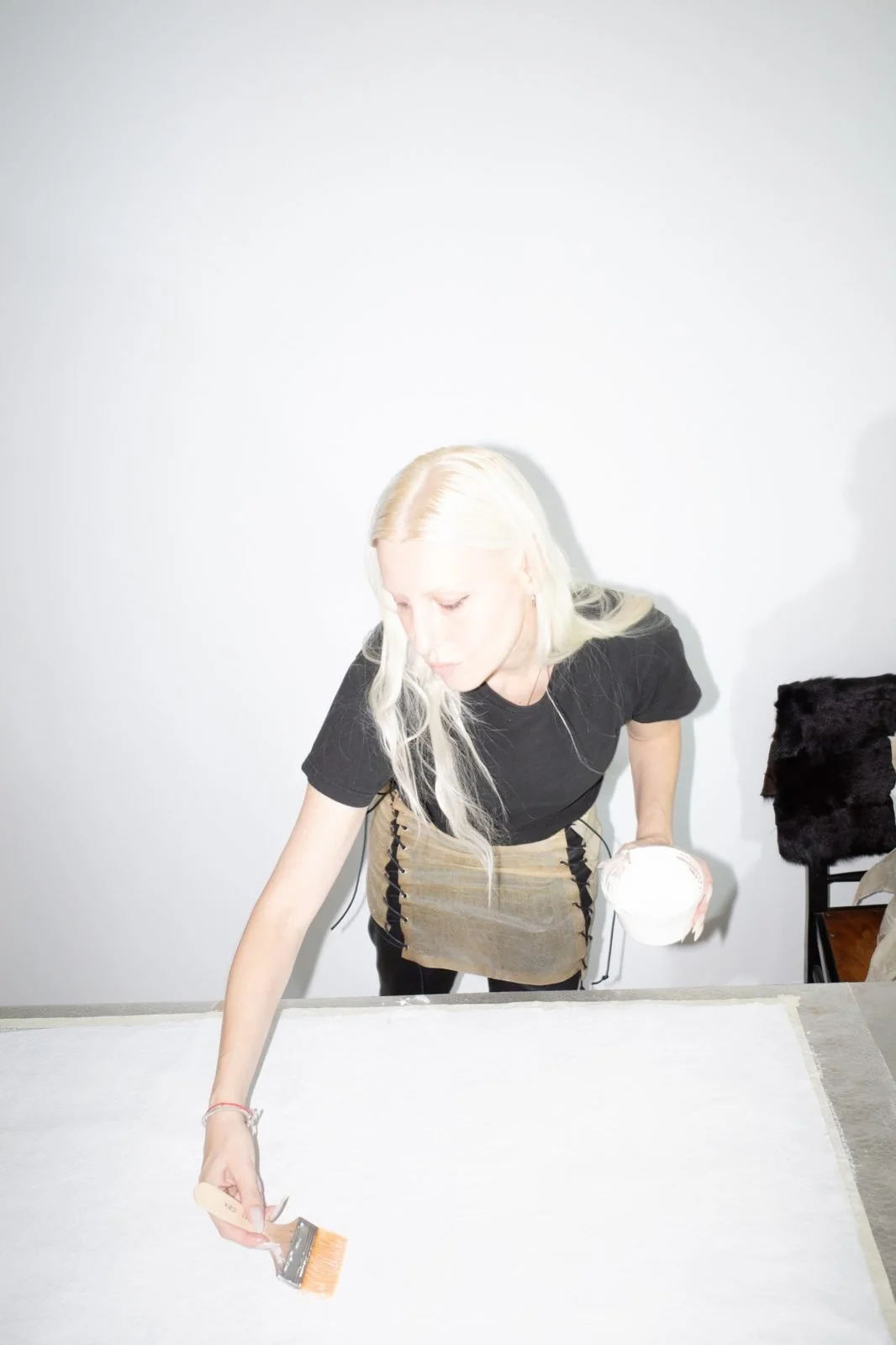
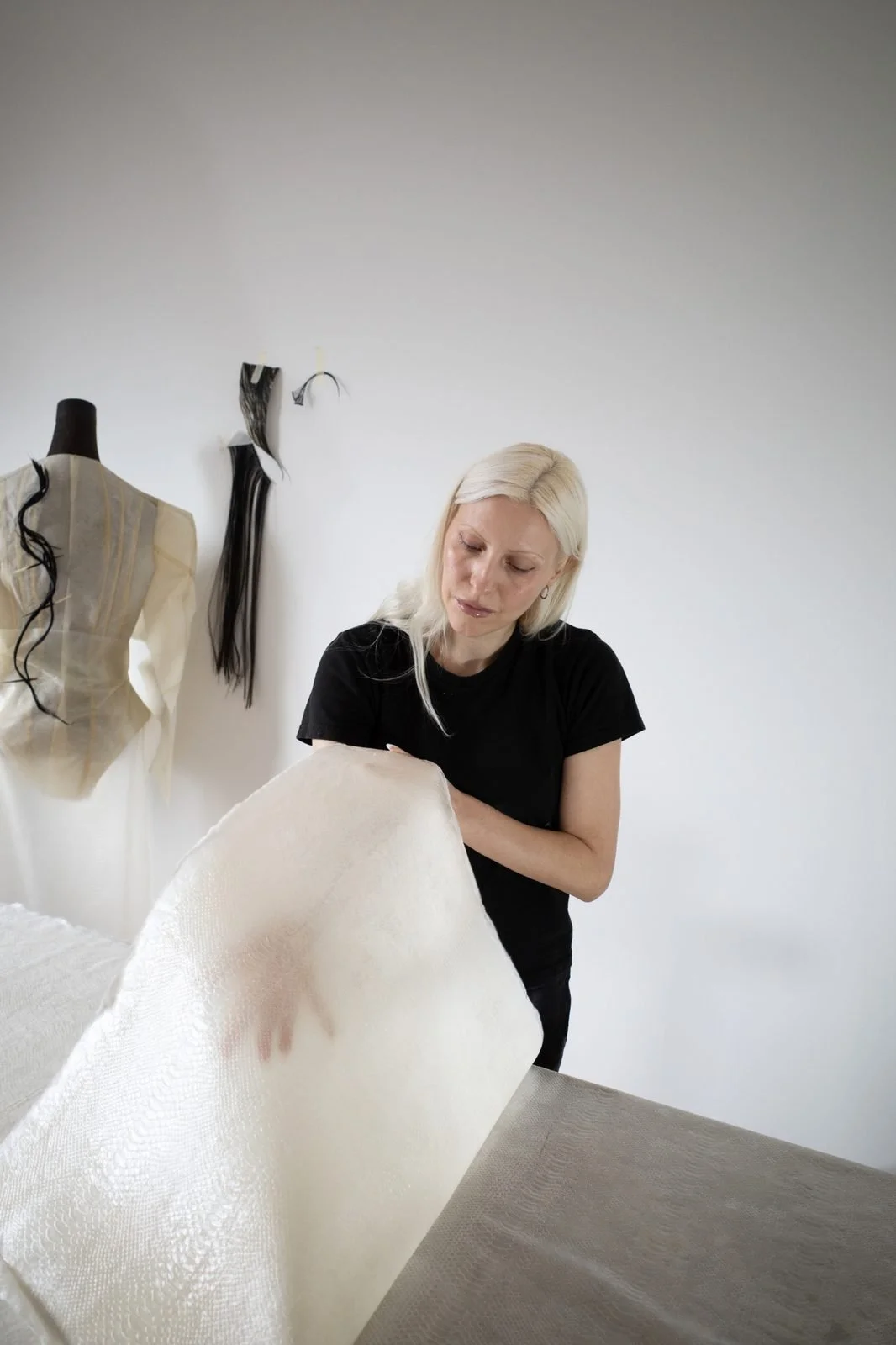
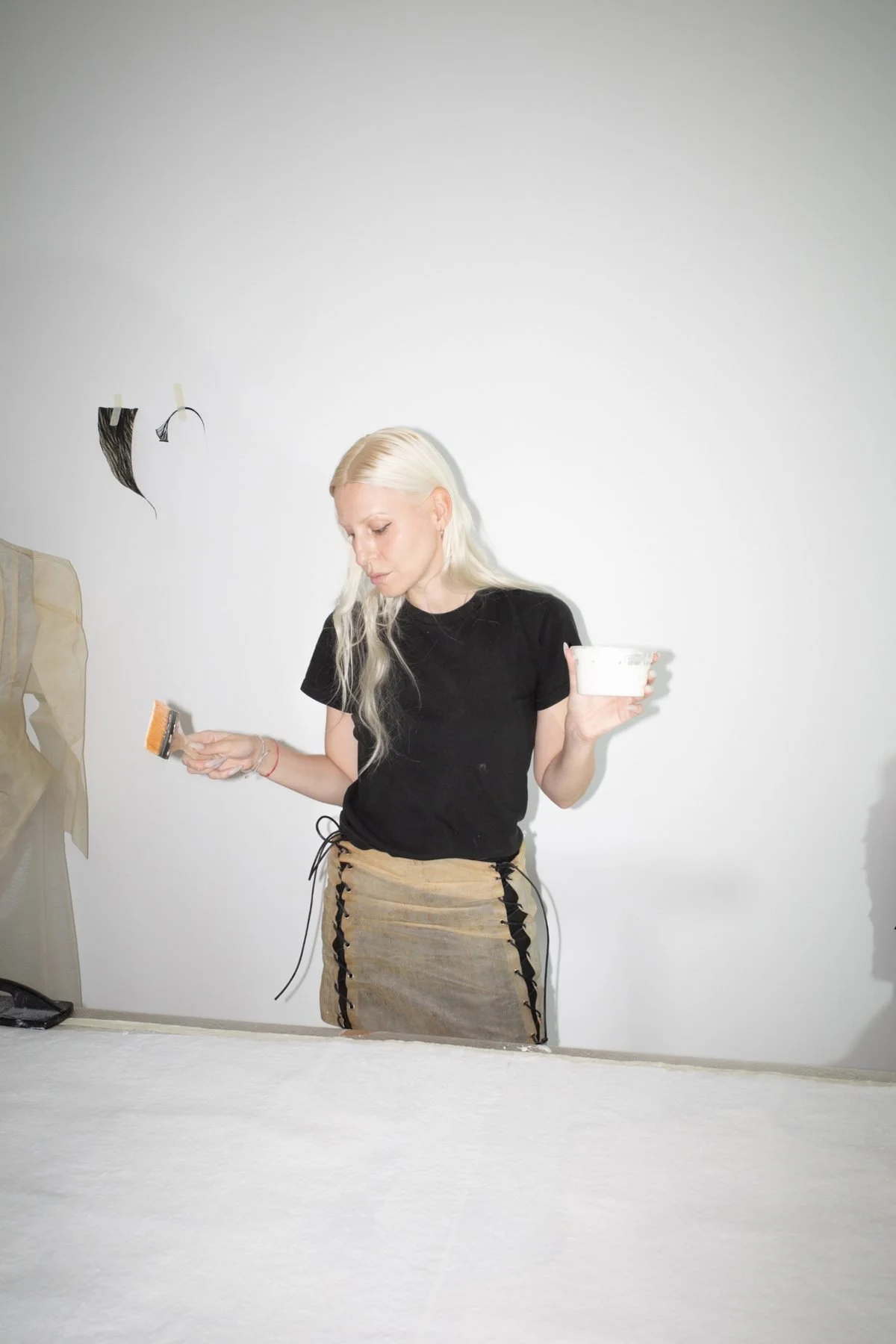
Each latex skin begins in liquid form and is developed by hand in Janine Grosche’s studio. The material is built gradually through moulding, casting and layering, allowing its translucency, surface and structural qualities to be carefully controlled.
Once formed, the skins are removed as complete membranes, revealing textured surfaces that retain the impression of the mould while remaining remarkably thin. Variations in colour, transparency, elasticity and structure are developed according to their intended application.
The process continues to evolve through ongoing experimentation, with each new material informing the garments, sculptural forms and future surfaces that follow.
TRANSLUCENT SNAKE SKIN LATEX
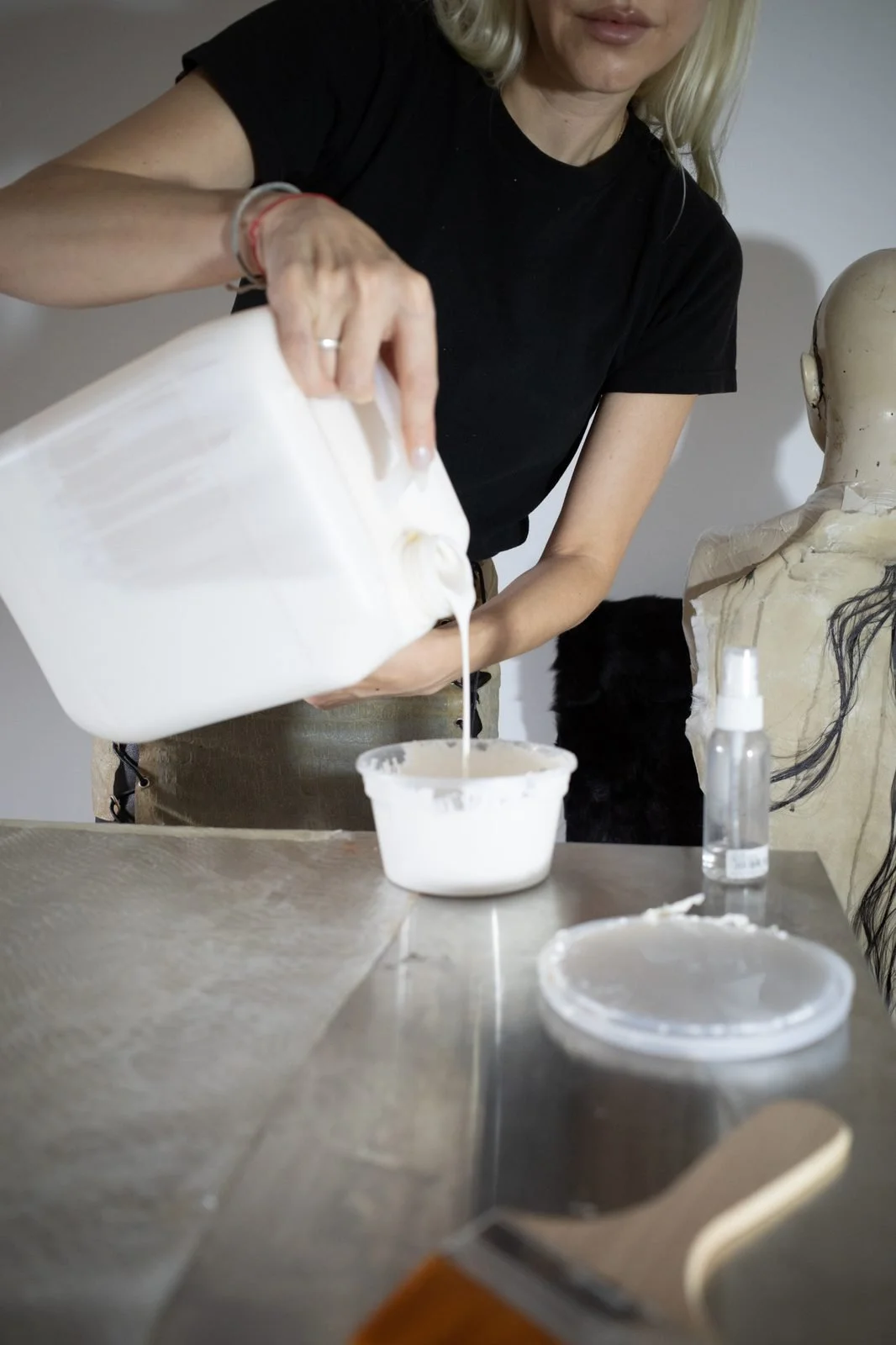
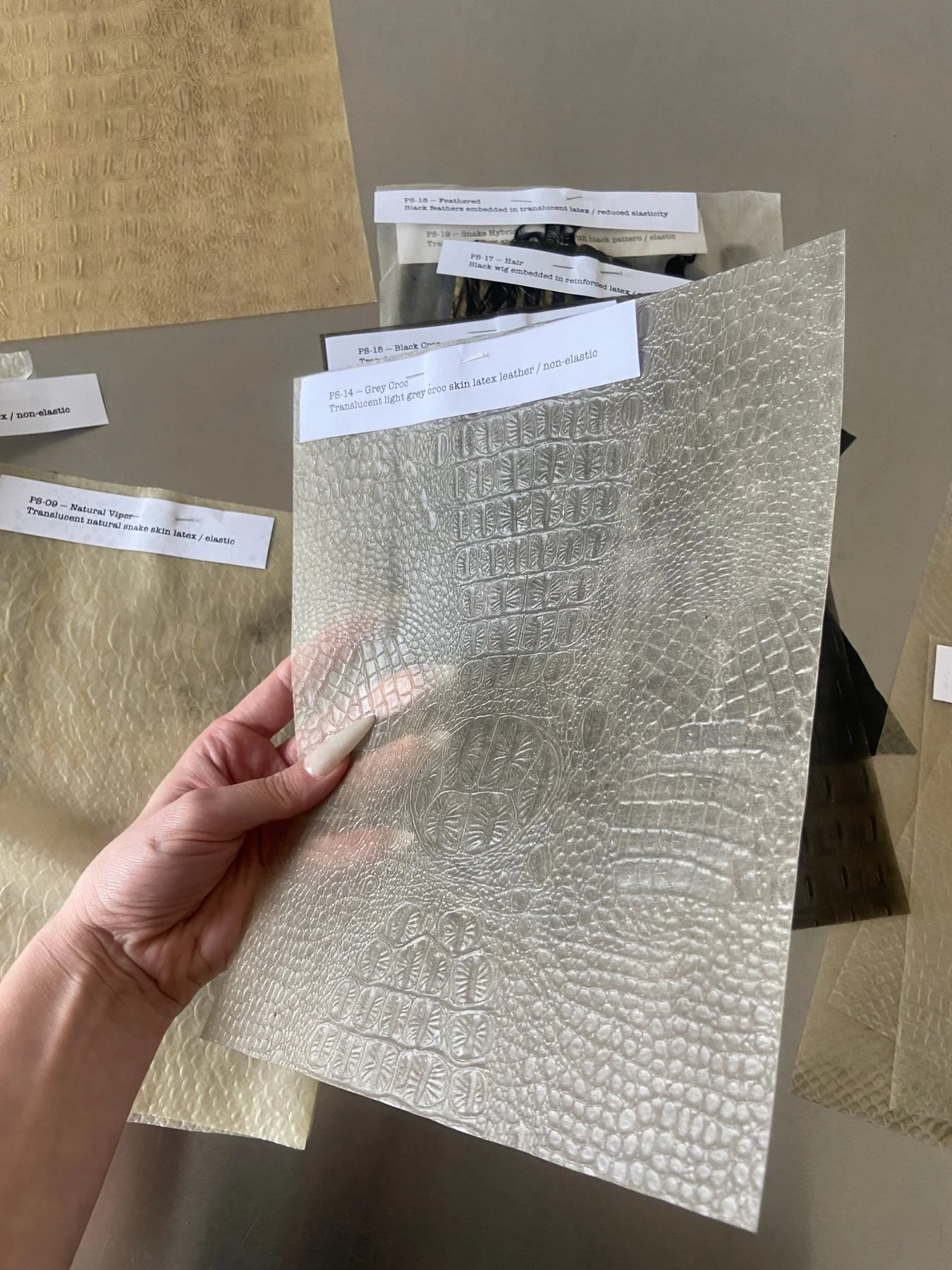
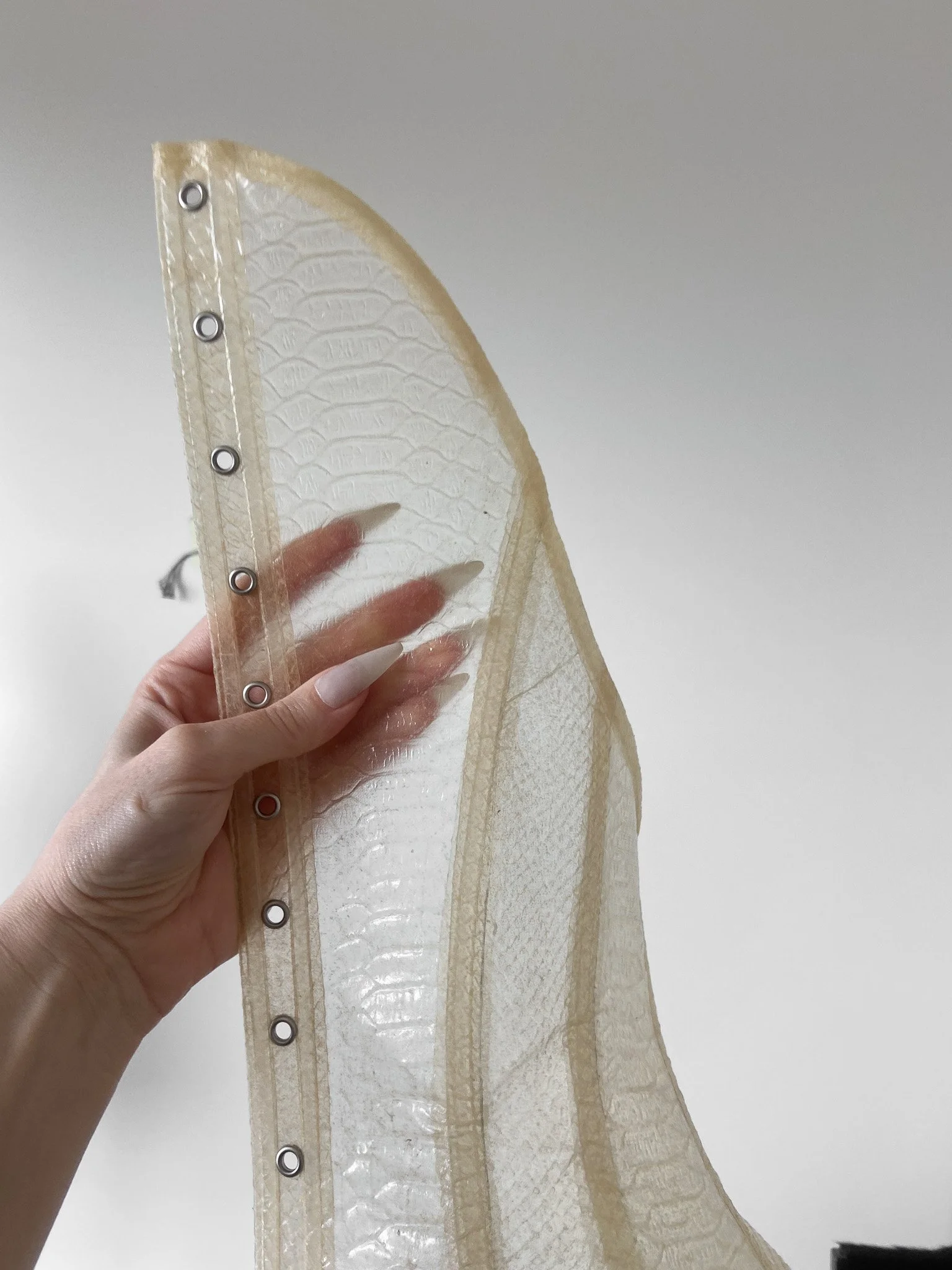
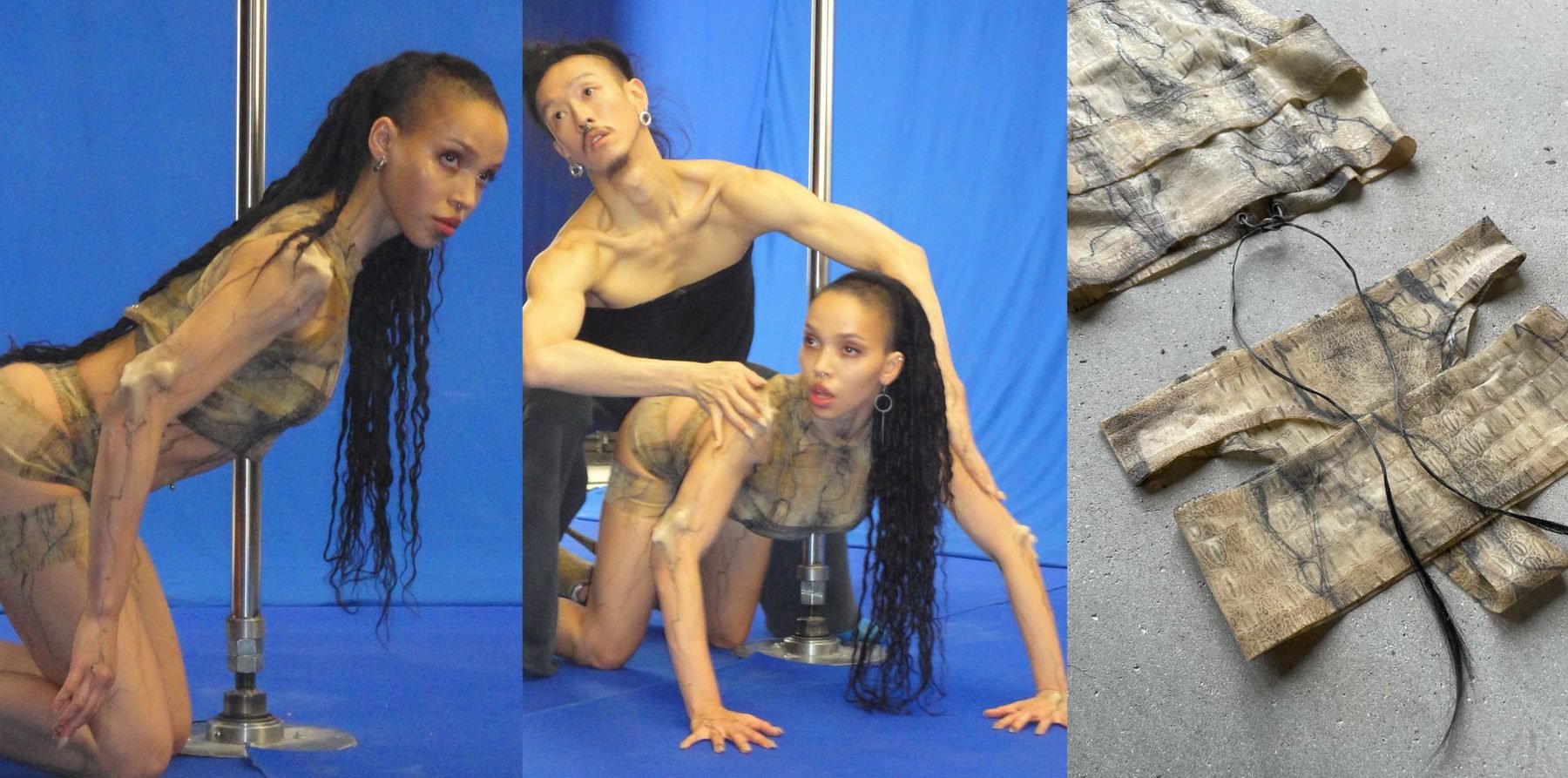
A central material development within Janine Grosche’s practice is her translucent snake skin latex, developed from natural liquid latex with a moulded snake-skin surface. The material combines an intricate organic texture with unusual translucency, allowing light, colour and the body beneath to remain visible.
Each skin is individually developed and handcrafted, resulting in subtle variations in texture, tone and transparency. Unlike commercially available latex sheeting, the material exists as a distinctive surface in its own right, forming the basis for garments, body-centred pieces and experimental constructions.
MATERIAL PROCESS
MATERIAL LIBRARY
TRANSLUCENT SCULPTURAL LATEX SKINS / LATEX LEATHER
Developed from natural liquid latex, these firmer, leather-like skins combine unusual thinness and translucency with the ability to hold shape and structure.
Individually developed by Janine Grosche, the material is distinct from conventional latex sheeting in its combination of translucency, tactile surface and structural strength.
These skins form the basis for sculptural garments and body-centred constructions, allowing latex to move beyond conventional textile into wearable, self-supporting forms.
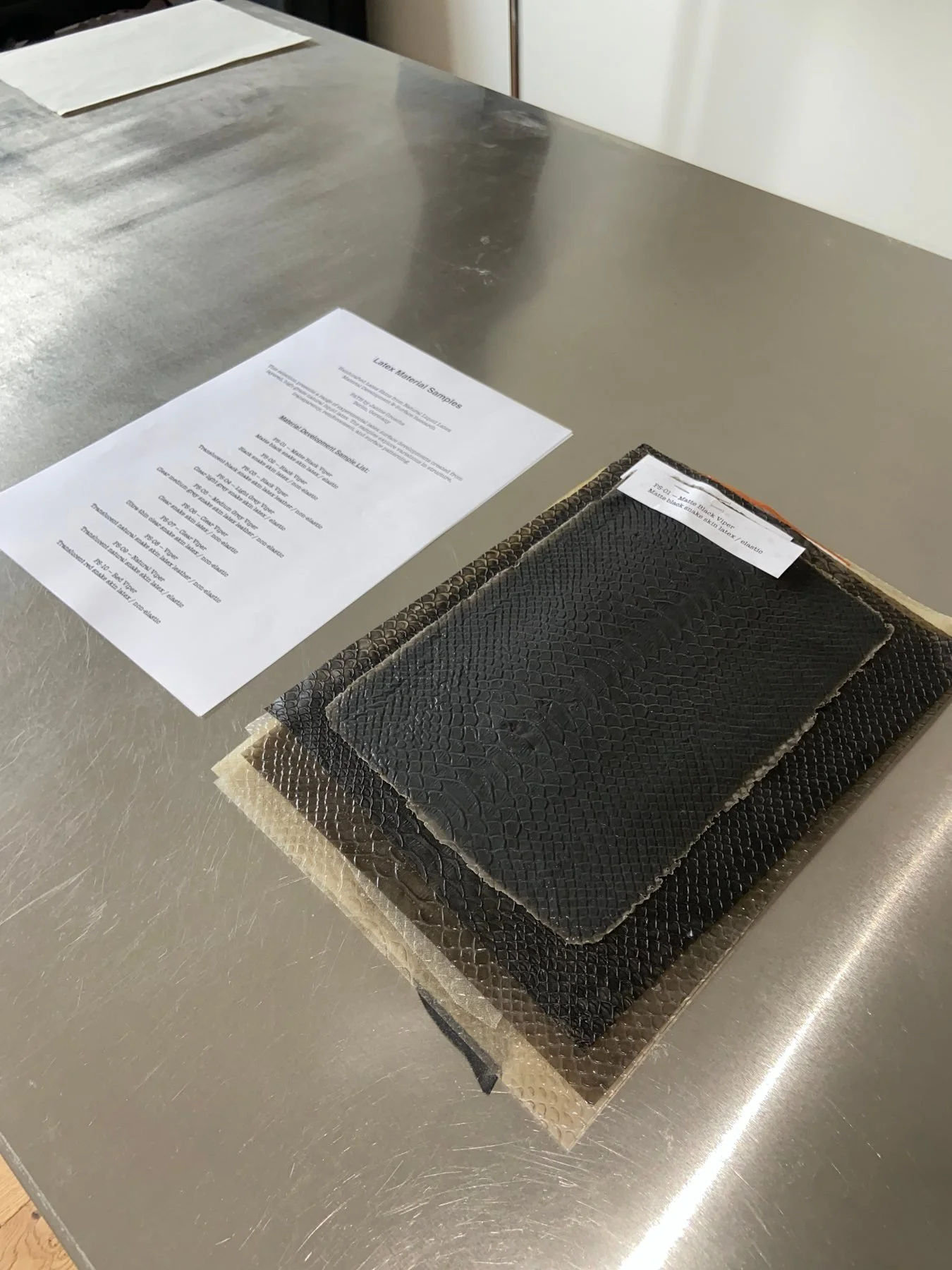
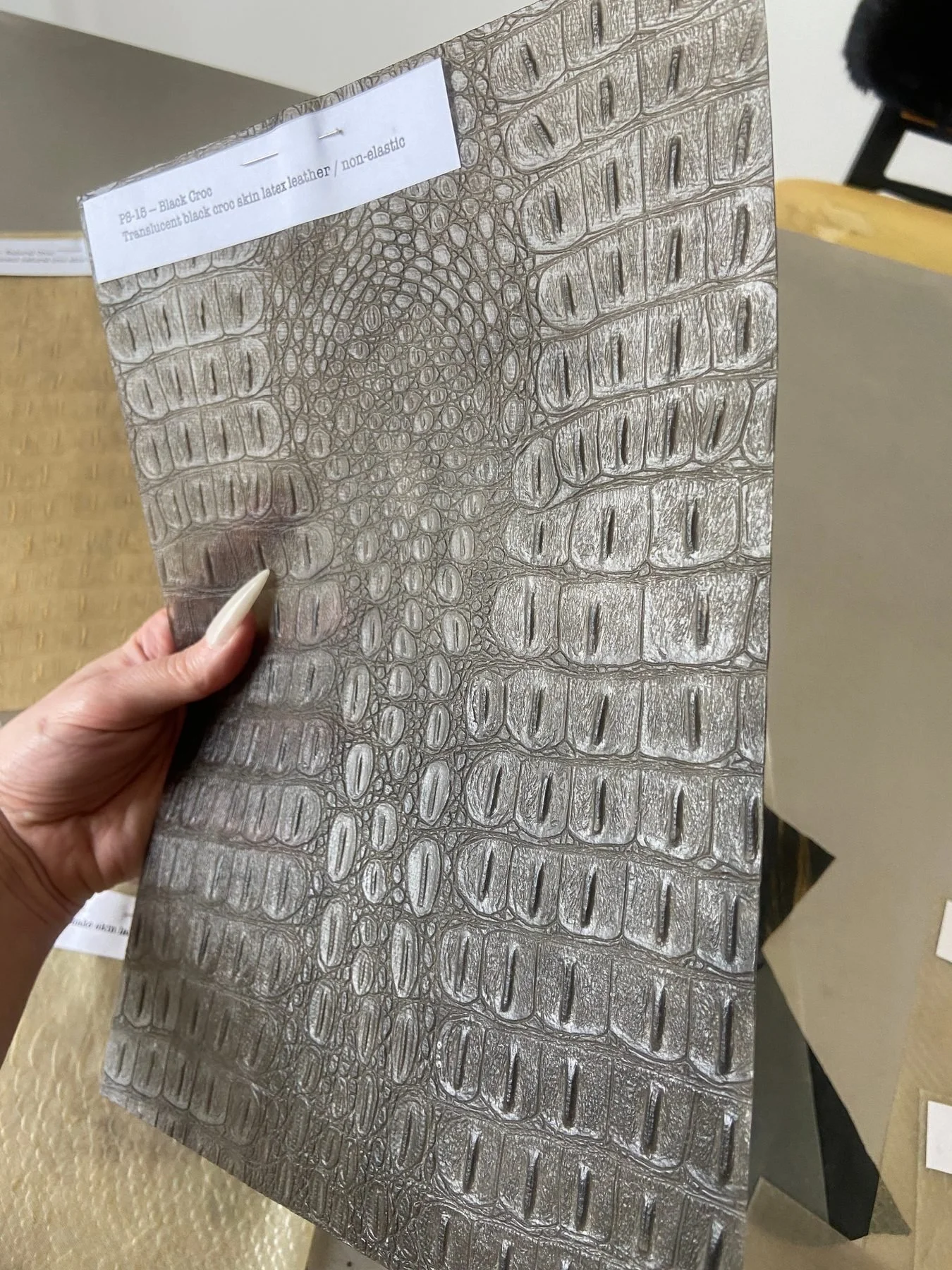
An evolving archive of individually developed latex skins explores variations in translucency, colour, surface, texture and structure. Each material study forms part of Janine Grosche’s ongoing research into natural liquid latex and its transformation into skin-like surfaces.
The library includes elastic and non-elastic skins, experimental surface imprints, pigmentation studies and materials developed for specific sculptural and body-centred applications.
BESPOKE MATERIAL DEVELOPMENT
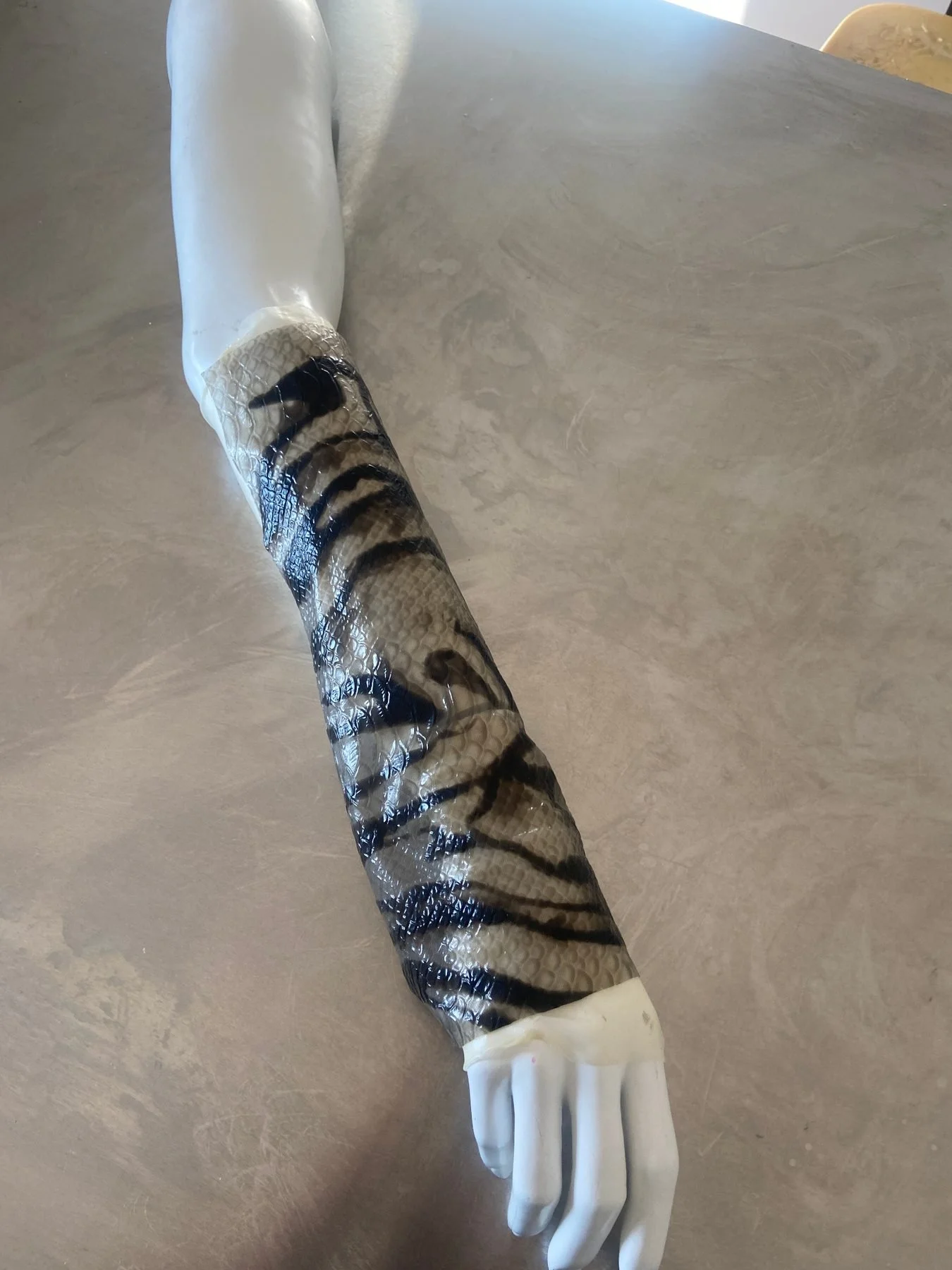
Alongside her independent material research, Janine Grosche develops bespoke latex skins, surfaces and sculptural material applications for selected creative collaborations.
Materials can be developed in response to a specific body, garment, performance or visual concept, extending the latex skins into one-off pieces and custom applications.
FKA twigs wearing custom crocodile-textured latex skins developed by Janine Grosche / PATH for “Striptease”, EUSEXUA, 2025.
FROM MATERIAL TO FORM
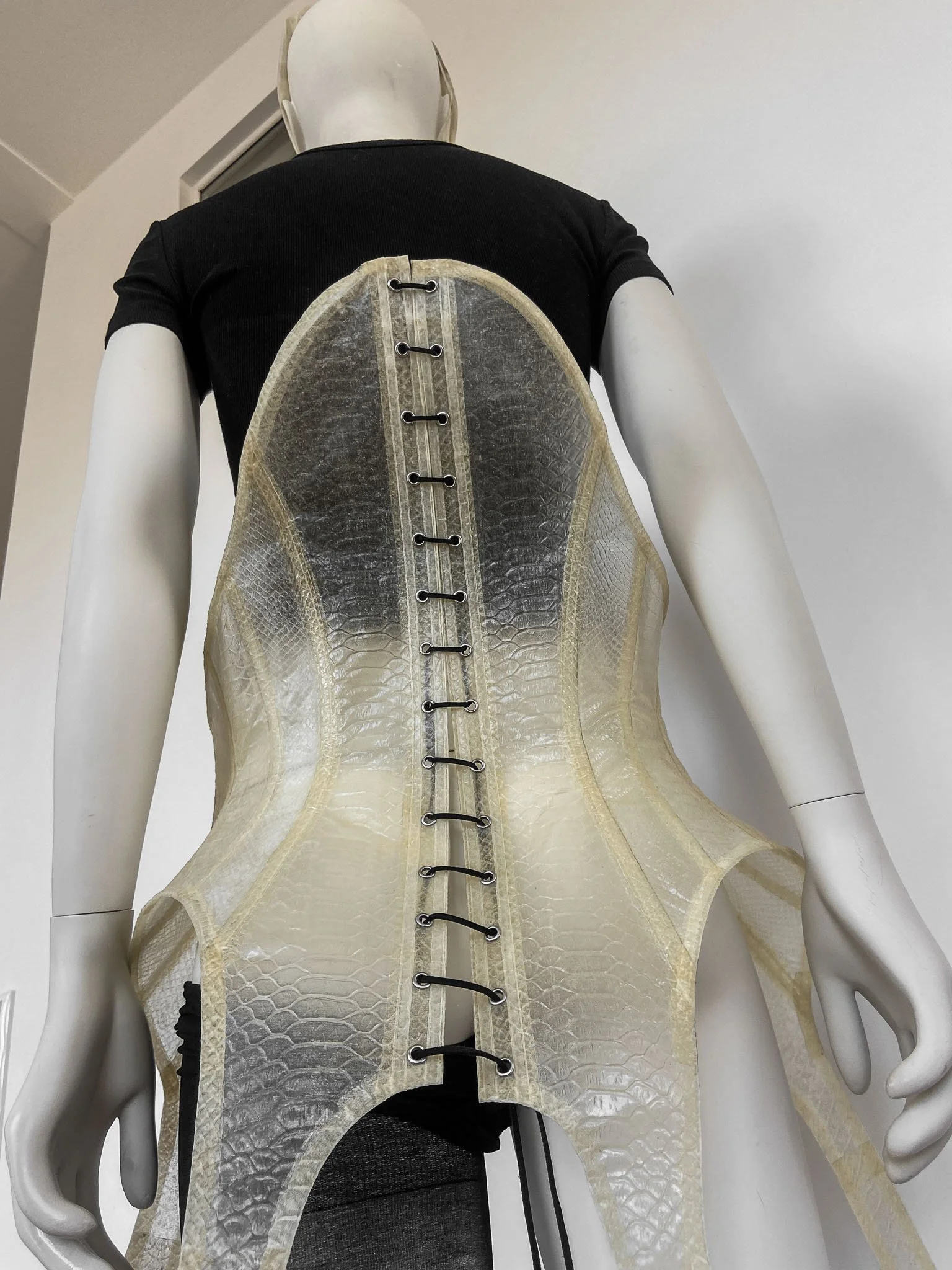
The material research extends directly into Janine Grosche’s sculptural and wearable work. Translucent latex skins are cut, shaped, joined and reinforced to create garments and self-supporting structures while retaining the delicacy and translucency of a membrane.
Construction becomes part of the material language itself. Seams, lacing, eyelets and structural interventions remain visible, allowing the skins to move between surface, garment and sculptural form.
MATERIAL MENTORSHIP
Developing your own material practice?
Janine Grosche offers one-to-one mentorship for designers, artists and students developing experimental material-based practices.
Sessions are tailored to each individual and can focus on material development, surface experimentation, pigmentation, troubleshooting, project direction and the translation of material research into sculptural or wearable forms.
Rather than a step-by-step class, the mentorship is conceived as a focused exchange around your own work, questions and material challenges.